
Storm season
Storm Debris Cleanup in Tangipahoa Parish: What to Do First
After a named storm the parish usually runs free curbside debris collection. Understanding what it covers and what it does not will save you money and a great deal of frustration.
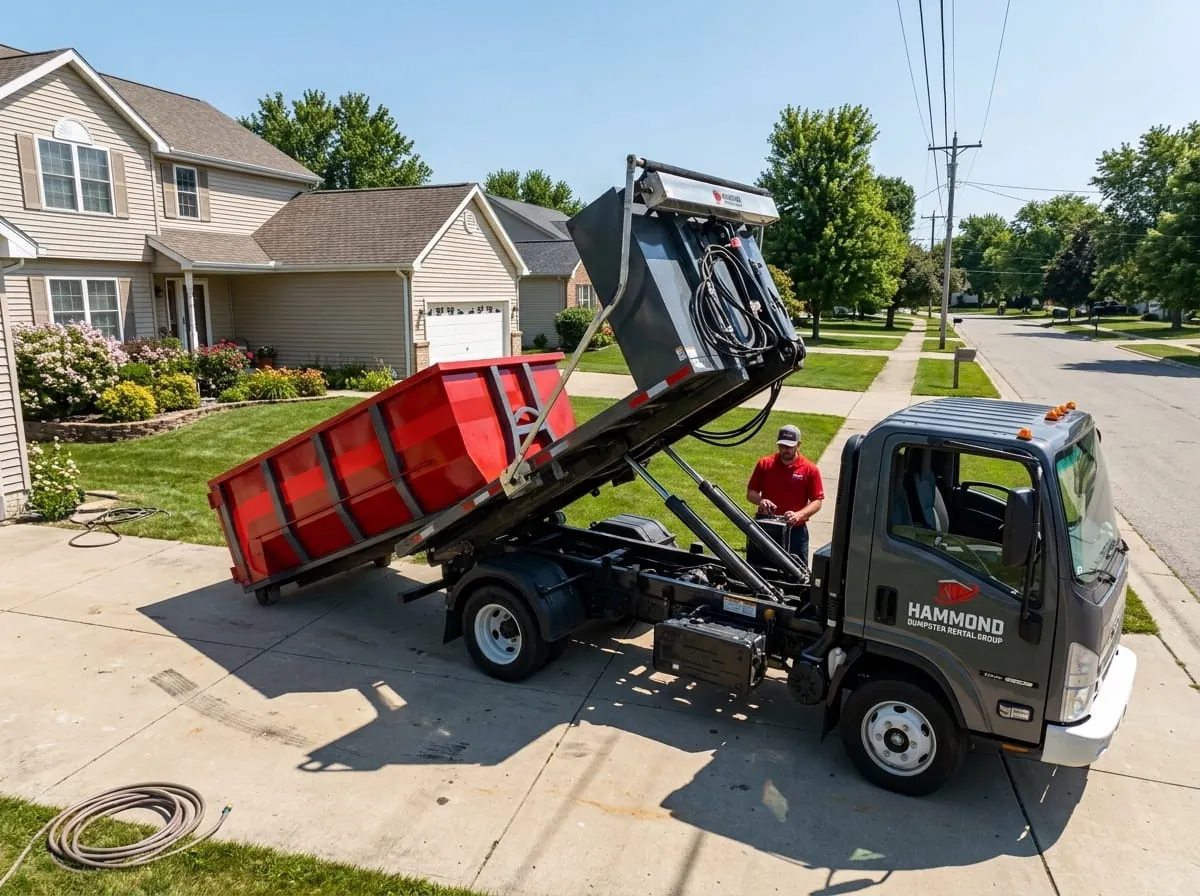
First 48 hours: safety and documentation
Before anything gets moved, two things matter more than clearing.
Safety. Treat every downed line as live. Do not touch limbs resting on power lines — report them and wait. Watch for damaged structures, nails in debris, snakes and wildlife displaced into piles, and standing water that may be contaminated. In a Louisiana summer, working outside all day without power is a genuine heat risk; start early and drink more than you think you need. Generators go outside, well away from windows, always.
Documentation. Photograph everything before you move it. Every damaged structure, every fallen tree, every water line inside the house. Multiple angles, something for scale. Adjusters are overwhelmed after a major event and may not reach you for weeks; your photographs are the record.
Do not dispose of damaged property before your adjuster has seen it or given permission, unless it is a health hazard. Wet carpet, drywall and insulation are the exception — mould starts within 24 to 48 hours in this climate and those generally have to come out immediately. Photograph thoroughly first.
How parish storm debris collection works
After a declared emergency, Tangipahoa Parish and the municipalities within it typically run a special storm debris collection programme, often with contracted crews and heavy equipment working through in passes. It is free at the point of use, and if it is running for your area you should use it.
Generally it works like this:
- Debris goes to the curb or the road frontage, clear of the road itself, and crucially clear of the ditch — blocking drainage before the next rain causes real problems.
- It is collected in separate passes by category — vegetative debris, construction and demolition debris, appliances and white goods, household hazardous waste, and electronics.
- Multiple passes happen over weeks. Missing the first is not a catastrophe.
- Only debris generated by the storm is eligible.
Check the parish and your town's announcements after an event, because the details change with each storm and each federal declaration.
What the free programme will not take
This is where people get caught out, and it is why storm cleanup often needs a container even when free collection is running.
- Debris already moved onto private property. Piled behind the house or in the barn rather than at the road, and it is generally not eligible.
- Debris from a contractor. If you hired someone to do the work, the material is usually construction debris and the contractor is expected to dispose of it.
- Mixed piles. Vegetation mixed with building material mixed with appliances often gets skipped entirely, because the crew running the vegetative pass cannot take it.
- Debris on private roads and long private drives — crews work the public right of way, so if your house is a quarter mile back a gravel drive, getting material to the road is on you.
- Pre-existing junk. The sofa that was in the barn before the storm is not storm debris, and crews are reasonably good at spotting it.
- Repair and rebuild material generated after the initial cleanup passes have finished.
When you need your own container
- You are doing repair work rather than initial cleanup — drywall, flooring, cabinetry coming out of a flooded house
- You hired a contractor, so the debris is not eligible
- Your property is well back from the public road
- The debris is already on private property
- You cannot wait for the collection schedule — you are selling, or the pile is a hazard
- You are a business, a landlord or a property manager
A very common pattern around here: use the free parish collection for the fallen pine and oak at the road, and rent a container for the interior repair debris.
Separating debris the right way
For curbside collection, the categories are usually vegetative; construction and demolition; appliances and white goods; household hazardous; and electronics. Keep those in five distinct piles, clear of the road and clear of the ditch. A mixed pile is a pile that gets left.
For a rented container, the same principle saves money for a different reason: clean vegetation disposes through a cheaper route than mixed debris. If you have a large volume of both, two containers is often cheaper than one. More on that here.
Flood debris is its own category
Wind damage and flood damage are different problems and they need different containers.
Flood debris is heavy. Saturated drywall, insulation, carpet, subfloor, cabinetry and furniture weigh a multiple of their dry equivalent. A 20 yard of flood gut can hit its weight allowance well before it looks full, so we size those jobs down and say so up front.
It is also urgent. In this climate mould takes hold within a day or two. The standard remediation sequence — cut the drywall above the water line, pull the insulation, lift the flooring, get air moving — needs to start fast, which is why we prioritise flood gut jobs over routine work when both are in the queue.
Livingston Parish in particular carries a lot of institutional memory here from the August 2016 flood, and a good number of the people we talk to have been through the whole process before. Rough guidance:
- Yard debris from one residential lot: 15 or 20 yard
- Yard debris from a heavily treed acre: 30 yard
- Interior flood cut-out, one to two rooms: 15 yard
- Whole-house flood gut: 20 yard, likely with a swap
Why capacity disappears after a storm
Every hauler has a finite number of containers and trucks. After a major event, demand across Tangipahoa, Livingston and St. Tammany multiplies overnight while the disposal facility itself is dealing with volume, damage and — on wet clay — access problems. Containers that normally turn around in three days take a week.
The result is that in the two to three weeks after a significant storm, lead times stretch for everybody, and any hauler promising same-day delivery in that window is probably not being straight with you.
What we do is be honest about it. If we can get you a container on Thursday we will say Thursday, not "probably tomorrow". And we prioritise customers with genuine habitability problems — water in the house, a tree through the roof — over routine work. That occasionally makes someone unhappy, and we still think it is the right call.
Preparing before the season
Hurricane season runs June through November. A few things are genuinely worth doing in May:
- Trim trees. The single most effective preventative measure. Deal with dead limbs and anything overhanging the roof. Doing it in spring also means the vegetation goes out in a normal container at normal rates rather than in a post-storm scramble.
- Clear the yard of loose items that become projectiles — and if there is junk you have been meaning to deal with, deal with it before June.
- Clear your ditches and culverts. Genuinely important here. A blocked culvert turns a heavy rain into a flooded driveway.
- Photograph your property, inside and out, before the season. Invaluable for a claim.
- Check your policy, specifically the hurricane and named-storm deductible, whether you carry flood cover separately, and what debris removal allowance you have. Many Louisiana policies include a debris removal allowance that people never claim because they do not know it is there.
If you are clearing preventatively before the season, that is exactly the kind of job we would rather do in May than in October. Yard waste containers are here, or call and describe the job.
Need a container in Hammond?
Call and describe the job. Three minutes on the phone gets you a size recommendation, a flat rate and a delivery window — and we will tell you if a smaller, cheaper container is the right answer.
Call (985) 602-2751